
Solutions Explained.
25 results
CRM vs ERP: Which System Does Your Business Actually Need?
A CRM manages the customers you are trying to win. An ERP runs the business that has to deliver what you sold them. Which system to build first, what each costs, when e-invoicing in Egypt and Saudi Arabia makes the decision for you, and why the hardest part of a digital transformation was never the technology.

You Hired Us for a Website So Why Are We Improving Your Logo?
When you hire HBS for a website or app, we don't just build the one thing on the ticket our process studies every technical detail that affects the result, and your logo is one of them. Here's why a poorly built logo hurts a digital product, why we enhance it at no extra cost as part of the project, and how we keep it from surprising clients.
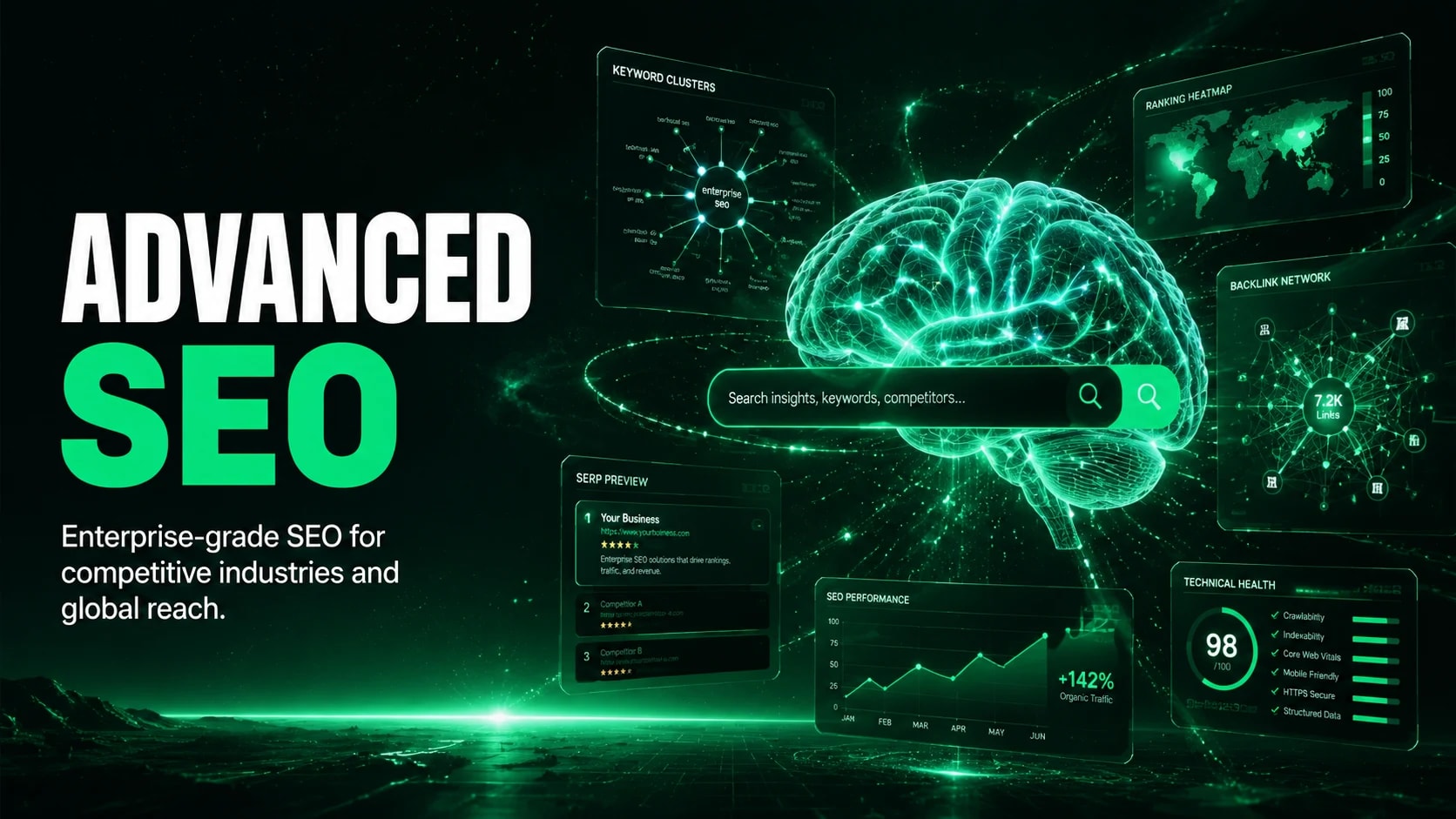
Freshness Signal: The One Check That Keeps Published Pages Alive
Freshness is not the publish date, and changing the date without changing the content is a trick both Google and AI crawlers detect. Here is what counts as a real freshness update, why faking it backfires, and how to signal a genuine refresh so AI engines re-cite the page.
Submit and Measure: Indexing and Tracking Your AI Visibility
In 2026 both Google and Bing finally report AI visibility. Here is how to submit and index a page in Search Console and Bing, what the new Search Generative AI performance report shows, whether to opt out of AI Overviews, and why Bing reports citations Google does not.
Not Blocking the Bots: Letting AI Crawlers Reach Your Pages
Most sites that vanish from AI answers do it by accident, blocking retrieval crawlers through a stale robots.txt or a Cloudflare toggle. Here is the training-vs-search bot split, the crawlers to know by name, and why you have to check both the robots.txt and CDN layers.
Image SEO: Compressed, Named, Described, and Sized Right
Unoptimized images are the single most common cause of a failing LCP. Here is how image SEO serves speed, accessibility, and discoverability at once: next-gen formats, descriptive alt text and file names, correct lazy-loading, and the explicit dimensions that stop layout shift.
Loads Fast: Passing Core Web Vitals for AI-Ready Pages
A page passes Core Web Vitals only when 75% of real visits hit LCP under 2.5s, INP under 200ms, and CLS under 0.1 — on real mobile devices, not a lab test. Here is what each metric measures, why mobile is your weakest report, and the specific fixes for each.
Technical Pre-Flight: The Six Technical Checks Before Your Page Goes Live
Perfect structure and sourcing count for nothing if your page loads slowly on mobile or hides from GPTBot at the CDN layer. Here are the six technical pre-flight checks, from Core Web Vitals to the training-vs-search crawler split, that make an AI-ready page actually reachable.

Author Bio Present: A Real Author, Tied to Person Schema
An anonymous "admin" byline signals no accountability to Google or AI engines. Here is what makes an author bio credible, how Person schema connects a page to a verifiable identity, and why AI-assisted and brand content still need a real author behind them.
Linked Sources: Outbound Links to the Evidence Behind Every Claim
Citing credible sources can lift AI visibility by up to 40%, but only if you link the right things. Here is what to link and what to leave unlinked, why primary sources beat aggregators, and how to keep your citation count honest.
Every Claim Backed: No Naked Statements in AI-Ready Content
AI engines cross-check claims before citing them, so a naked statement is a liability. Here are the four tests every factual claim must pass, what to do with a figure you cannot verify, and why an unbacked number takes the whole page down with it.
Trust and Sourcing: The Three E-E-A-T Checks Every Page Must Pass
AI engines cross-check the claims they cite, and one fabricated figure discredits the page. Here are the three trust and sourcing checks: backing every claim, linking primary sources, and tying a real author to Person schema.
Add Your Real Experience: The Proof AI Engines Cannot Find Anywhere Else
Structure can be copied in an afternoon; a measured result cannot. Here is why first-hand experience is the first E in E-E-A-T and the strongest citation asset in AI search, what counts as real proof on a page, and how to write an experience block that gets quoted.
Front-Load the Answer: Why 44% of AI Citations Come From Your Intro
44.2% of ChatGPT citations come from the first 30% of a page, and the conclusion earns almost none. Here is the data on where AI actually reads, the four moves that front-load a page, and why the delayed-reveal intro costs you citations.
The Content Capsule Technique: Answer Blocks AI Can Lift and Quote
AI engines retrieve and cite passages, not pages, and buried answers are 2.5x less likely to be cited. Here is the content capsule technique: self-contained 40 to 80 word answer blocks under every question heading, with the data behind it and the recipe to write one.
Services on Separate Pages: Why Every Service Needs Its Own URL
A single "Our Services" page loses every commercial query to more focused competitors. Here is why each service needs its own dedicated URL, the anatomy of a service page that wins AI search, and how to structure the hub without creating doorway pages.
One Page, One Intent: Why Kitchen-Sink Pages Lose in AI Search
AI engines retrieve answers per sub-question, not per keyword. Here is why a page built for a single search intent beats a kitchen-sink page in AI search, and how to audit and split your pages without losing the rankings you already earned.

HBS Becomes the Technical Partner for the Precision Holding Group
HBS is now the technical partner behind the Precision Holding group's digital presence delivering a corporate holding website and a full custom website with an enterprise CMS for its flagship engineering consultancy, PCE.
Page Structure for AI Search: 5 Rules to Get Cited, Not Just Ranked
AI search engines cite pages they can extract a clean answer from. Five structural rules decide whether your page becomes that source: one intent per page, one page per service, content capsules, a front-loaded answer, and real first-hand proof.

Social Media Management Strategy for 2026
Social media shifted in 2025–2026: short video, falling organic reach, and AI content. A practical 2026 management framework — goals, platforms, content calendar, AI, and the right metrics.

How to Choose a Software Company: 8 Criteria
Most companies pick a software firm on price or a recommendation — the biggest mistake. 8 practical criteria to evaluate any software company before you sign, plus 10 questions and 5 warning signs.

Website Design Cost in Egypt: 2026 Guide
"How much does a website cost?" — a practical 2026 guide with real Egyptian-market numbers across four site tiers, the 8 factors that set the price, and the warning signs to avoid in quotes.

10 Steps to Professional Logo Design in 2026
A practical 10-step guide to professional logo design — from research and early concepts to execution and final delivery. With common mistakes and tips from the HBS Group design team.

Why Saudi Businesses Need SEO in 2026: A Complete Guide
Saudi Arabia's e-commerce market hits $31.29 billion in 2026, its digital ad spend grows at 16.8% annually, and 97% of consumers search before buying. Here is why SEO is the most important investment a Saudi business can make this year — backed by real data and source references.