A situation that keeps coming up
A client hires us to build a website or an app. Partway through, we point out that their logo needs work and we improve it, at no extra charge. And a fair question follows: "I asked for a website. Why are you touching my logo?" This happens often enough that it's worth explaining, because the reason isn't that we're upselling a logo service. It's how we work.
Our approach: study every technical aspect of the project
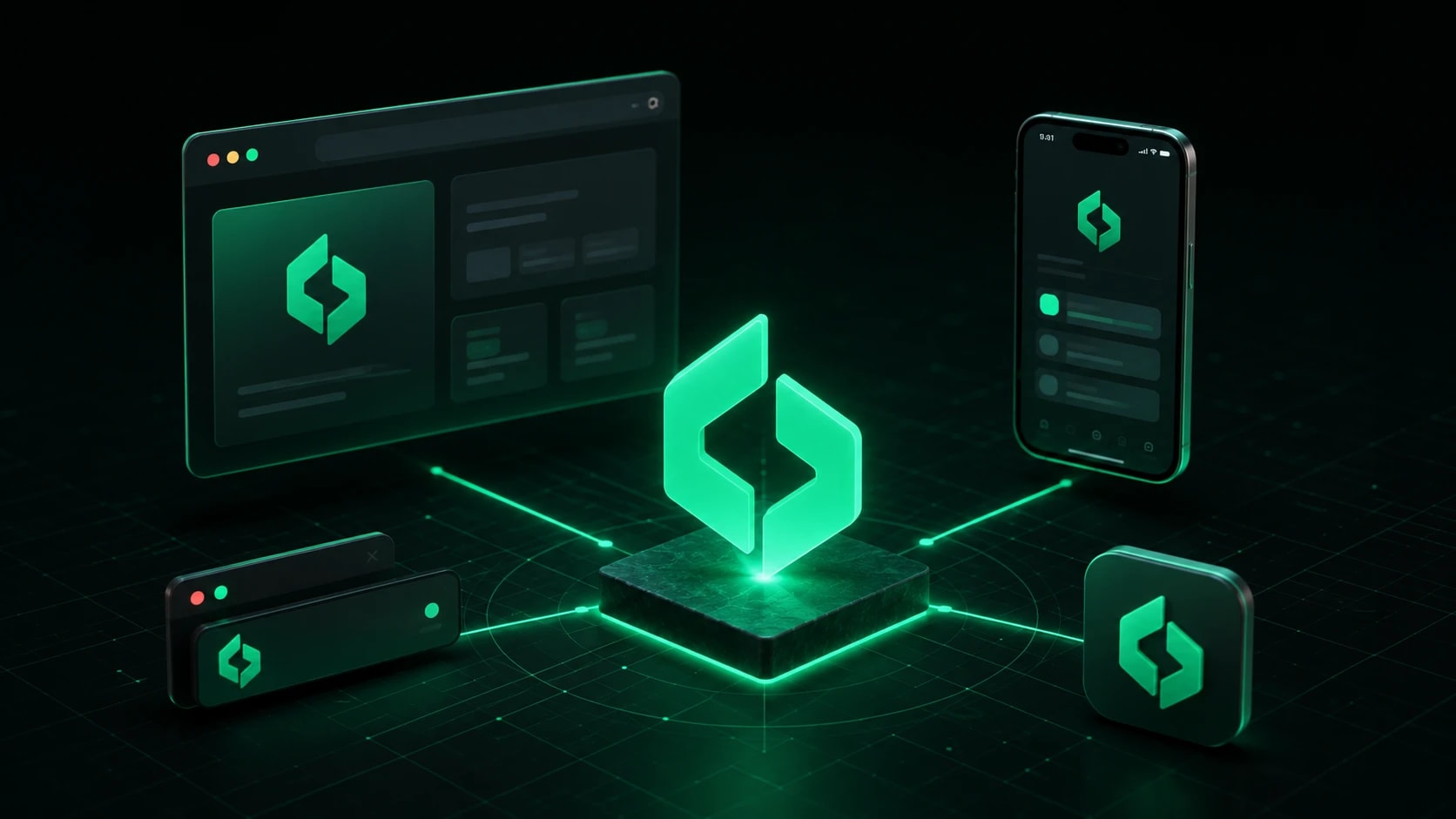
When HBS takes on a technical project, we don't deliver the single item on the brief in isolation. Part of our strategy is to examine every technical dimension that affects the outcome and to fix the ones that would otherwise drag the result down. Your brand's logo is one of those dimensions. In a website or an app, a logo isn't decoration on top; it's a working technical asset that appears in dozens of places, and if it isn't built properly, it degrades the very product we're delivering.
Why your logo is a technical part of a website or app
A logo built only as a flat image, without proper construction or variants, quietly breaks across a digital product:
Favicon. The tiny browser-tab icon needs a simplified, single-color-safe mark. A busy or raster logo turns into a blur.
App icon. Stores and devices demand crisp icons at many fixed sizes; a logo that isn't vector and scalable can't supply them cleanly.
Headers, footers, and light/dark backgrounds. The logo has to sit cleanly everywhere in the UI, which needs monochrome and reversed variants.
Social and OG images. Share cards and profiles need a version that reads at a glance and holds up when scaled.
Print and off-screen use. Invoices, signage, and documents need vector output, not a low-resolution export.
Ship a website or app on top of a logo that can't do these things, and the cracks show up in the final product no matter how good the code is. That's why we treat the logo as part of the build.
"Enhancement," not a rebrand
To be clear about what we do here: we enhance the existing logo, we don't replace it. An enhancement aligns your current mark with the fundamentals a strong logo needs simplicity, distinctiveness, and above all scalability and clean single-color and vector output while protecting the brand's identity and the recognition it already has. Practically, that means rebuilding it cleanly as a vector, balancing proportions and spacing, and producing the missing variants (single-color, monochrome, icon-only, correct clear space). The brand still looks like itself; it just works everywhere the project needs it to. A full identity redesign is a different, separate thing and a paid one for when a brand genuinely needs to start over.
A good example is a long-established company we recently built a digital product for. Its logo carried real history, so replacing it was never the goal. As part of studying the project's technical needs, we enhanced the existing mark to meet the standards the product required and the brand kept its identity while finally performing cleanly across every size and surface.
Why this causes friction and how we handle it
Because the work is unexpected and free, and because a logo is personal, a few patterns repeat:
Enhancement heard as rebrand. "Improving the logo" gets read as "redesigning the logo." Different scope, different outcome.
Emotional attachment. A logo used for years carries memories, so even a standards-driven change can feel personal understandable, and easier once the reason is clear.
No shared standard. Without agreed criteria, feedback becomes "I don't feel it." The fundamentals give everyone an objective language.
"Free" mistaken for "unimportant." It's not a throwaway add-on; it's part of delivering the project properly.
We manage all of this the same way: by being explicit up front. We flag early that the project includes a technical review of the logo, we define exactly what the enhancement covers, we judge the result against written standards, and we explain the reason behind each change and we keep it clearly separate from a paid, full rebrand. Handled that way, an unexpected "why are you touching my logo?" becomes an easy "good catch."
The short version
We don't build in a vacuum. When you hire HBS for a website, an app, or another technical project, we study everything that affects the result including your logo and fix what would hold the product back. If you're planning a project and want that kind of end-to-end technical care, see our brand and logo work or talk to us.