LDY CO: Website CMS, Product Catalogue & Event Registrations Enterprise Software Development
Project Overview
How HBS built LDY CO's CMS: a bilingual catalogue of thousands of lab instruments, event registration forms with QR sharing, and roles shared with the CRM.
Project Overview
Labib Demian Youssef & Co. (LDY CO) has distributed laboratory instruments in Egypt since 1962, as an authorized agent for brands such as METTLER TOLEDO and BUCHI. When HBS rebuilt ldy-co.com, it also built the LDY CMS: the back office that runs a catalogue of thousands of instruments and spare parts, the company's editorial content, seminar registrations and every team's access rights.
The CMS shares its users, roles and permissions with the LDY CRM that HBS built for the sales team, so each employee has one identity across both systems.
Names, emails and user counts in the screenshots are demo data. Product and catalogue content is the company's public website content.
The Challenge
A lab-instruments catalogue is unforgiving: thousands of SKUs, each tied to a brand, several industries and a sub-category, each with technical specifications, datasheets and images, and all of it bilingual. On top of that, LDY runs technical seminars that need professional registration pages, and several departments (marketing, sales, service) need different levels of access to the same content. The team needed one system to manage all of it without a developer.
What the CMS Does
1) Product catalogue at scale
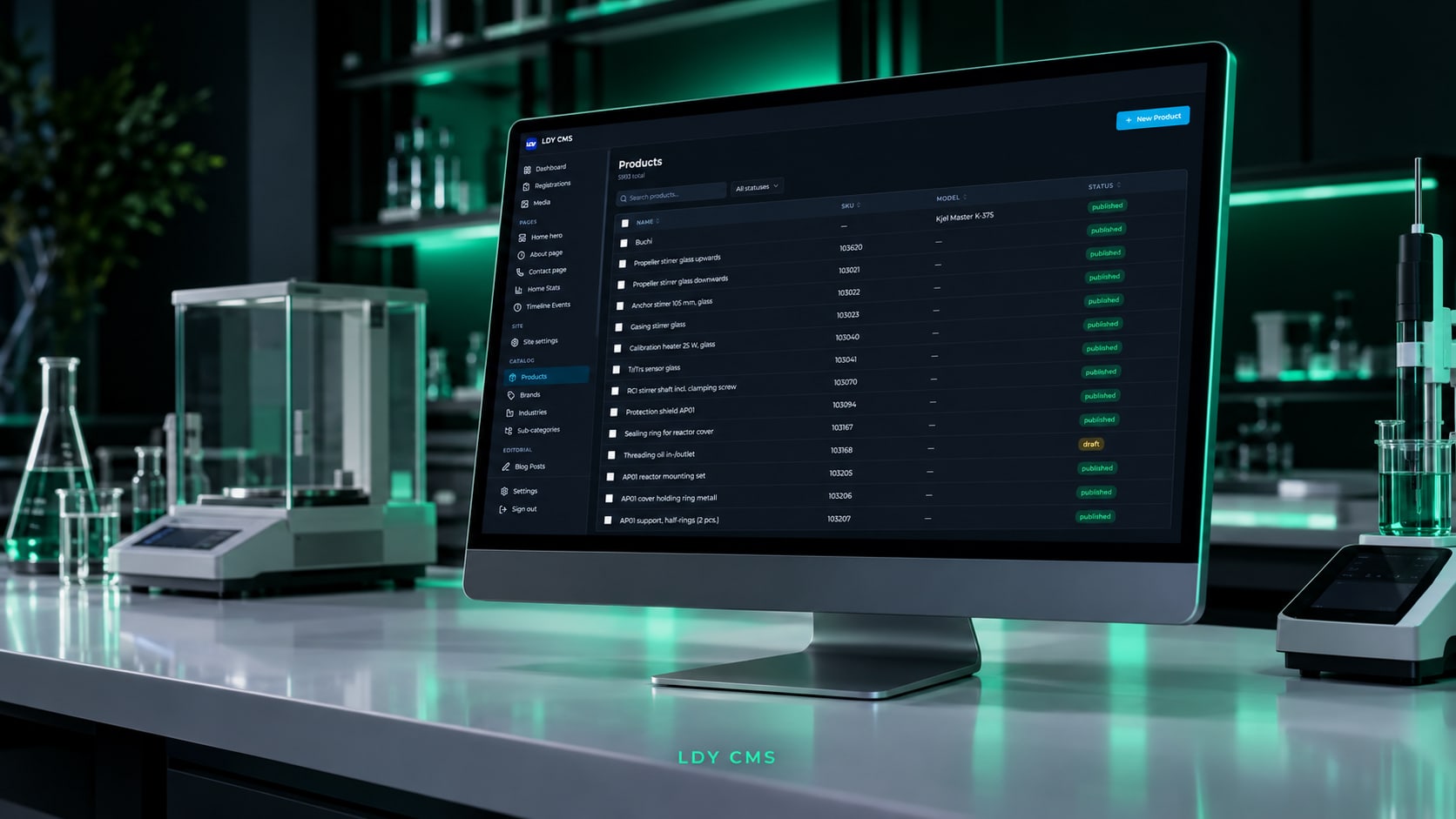
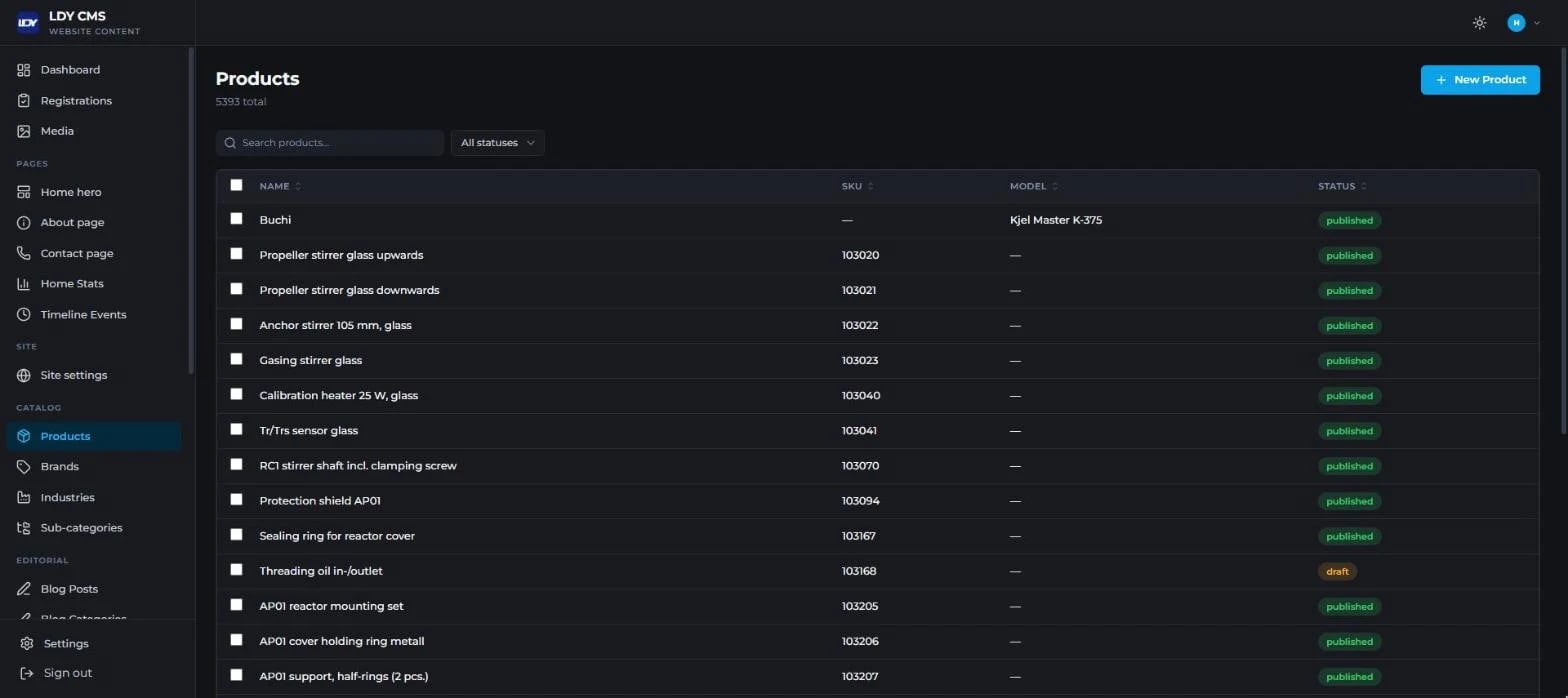
A searchable, sortable product table with status filters (published or draft) and bulk selection across thousands of items.
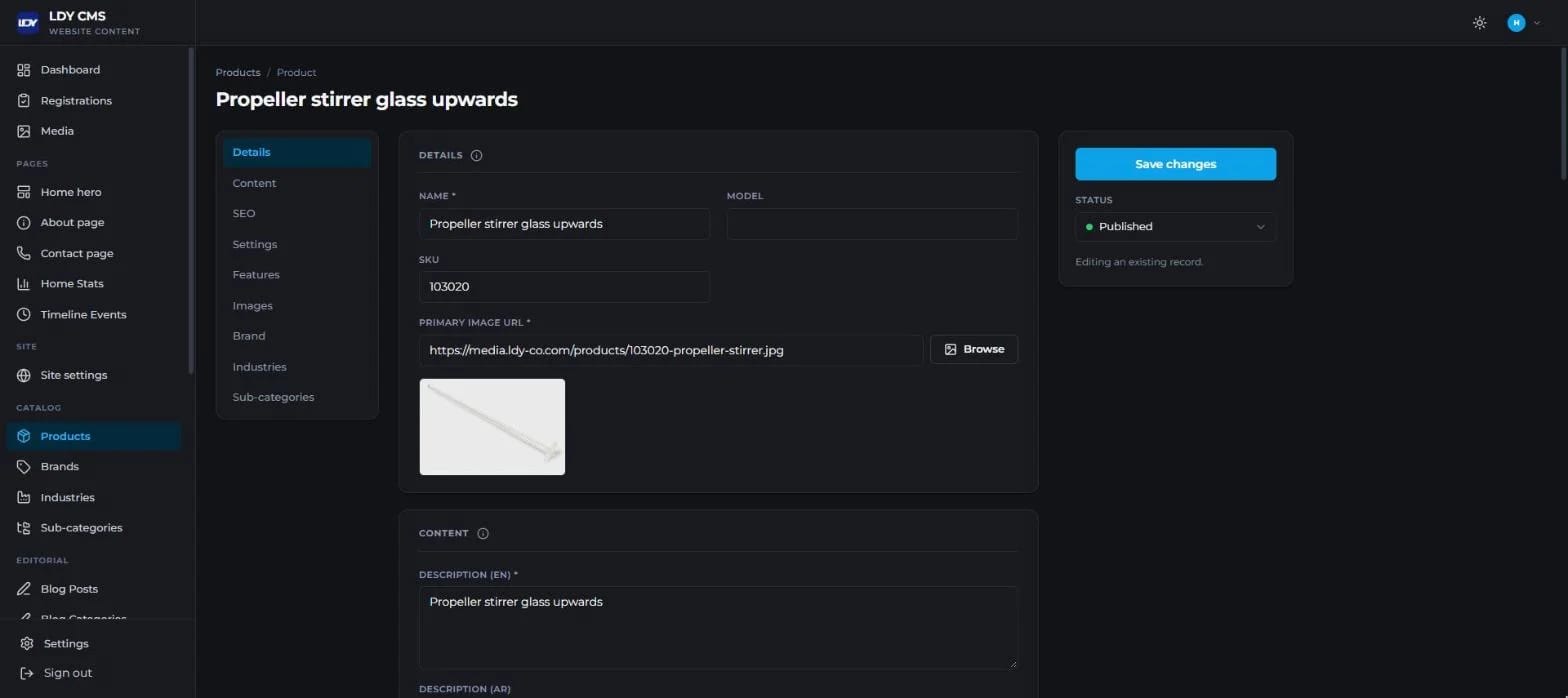
A sectioned product editor: details (name, model, SKU, primary image picked from the media library), English and Arabic descriptions, datasheet link, warranty period, SEO meta tags and display settings.
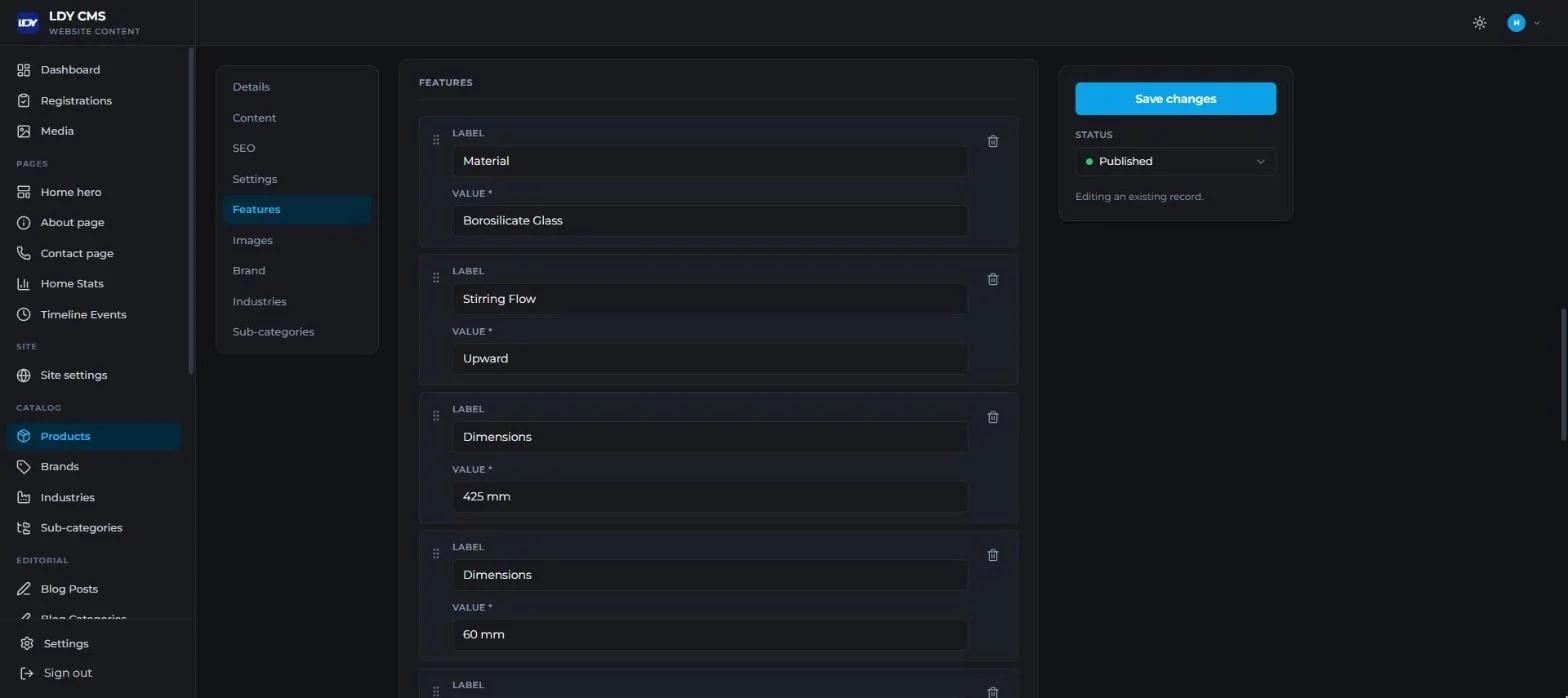
Repeatable technical specifications (label and value), reordered by drag and drop, plus an image gallery.
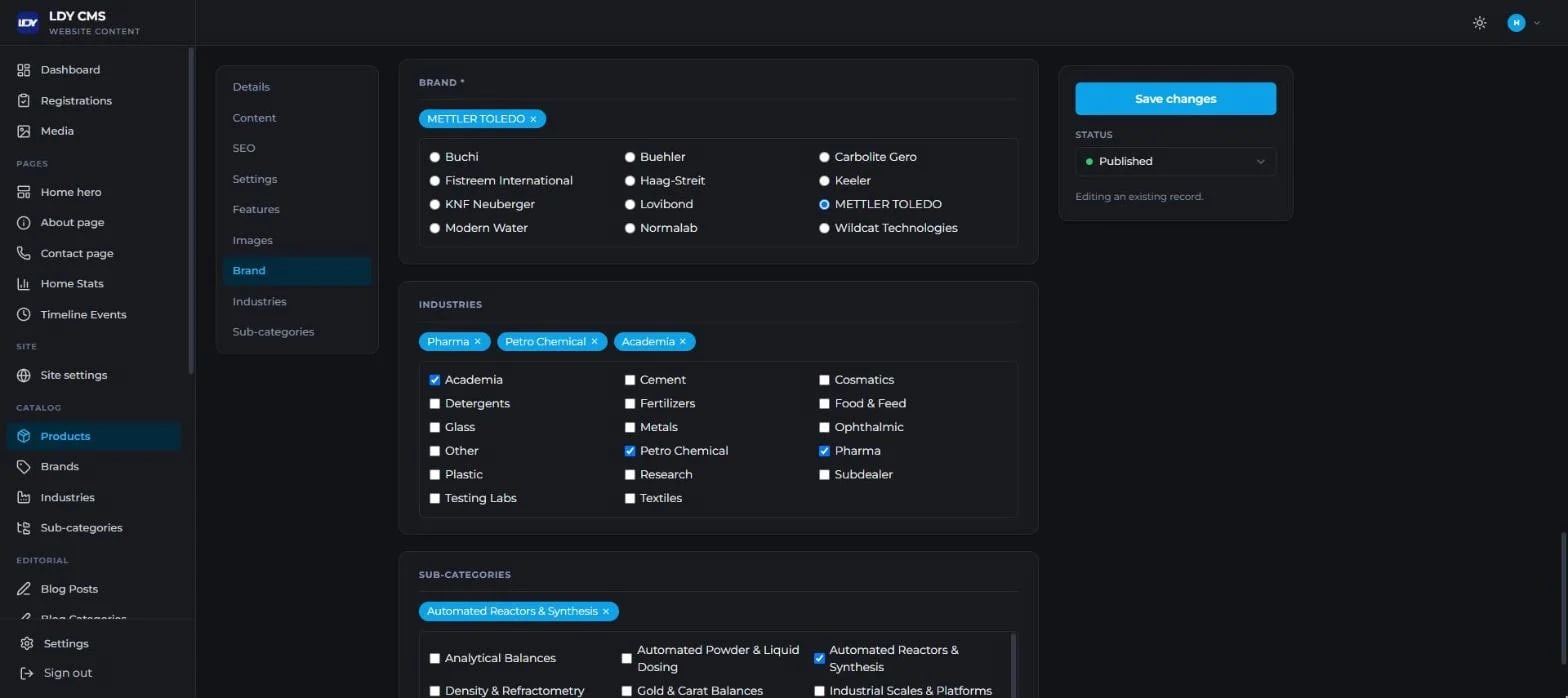
Brand, industries and sub-categories selected per product, with chips summarising the current selection.
2) Event registrations
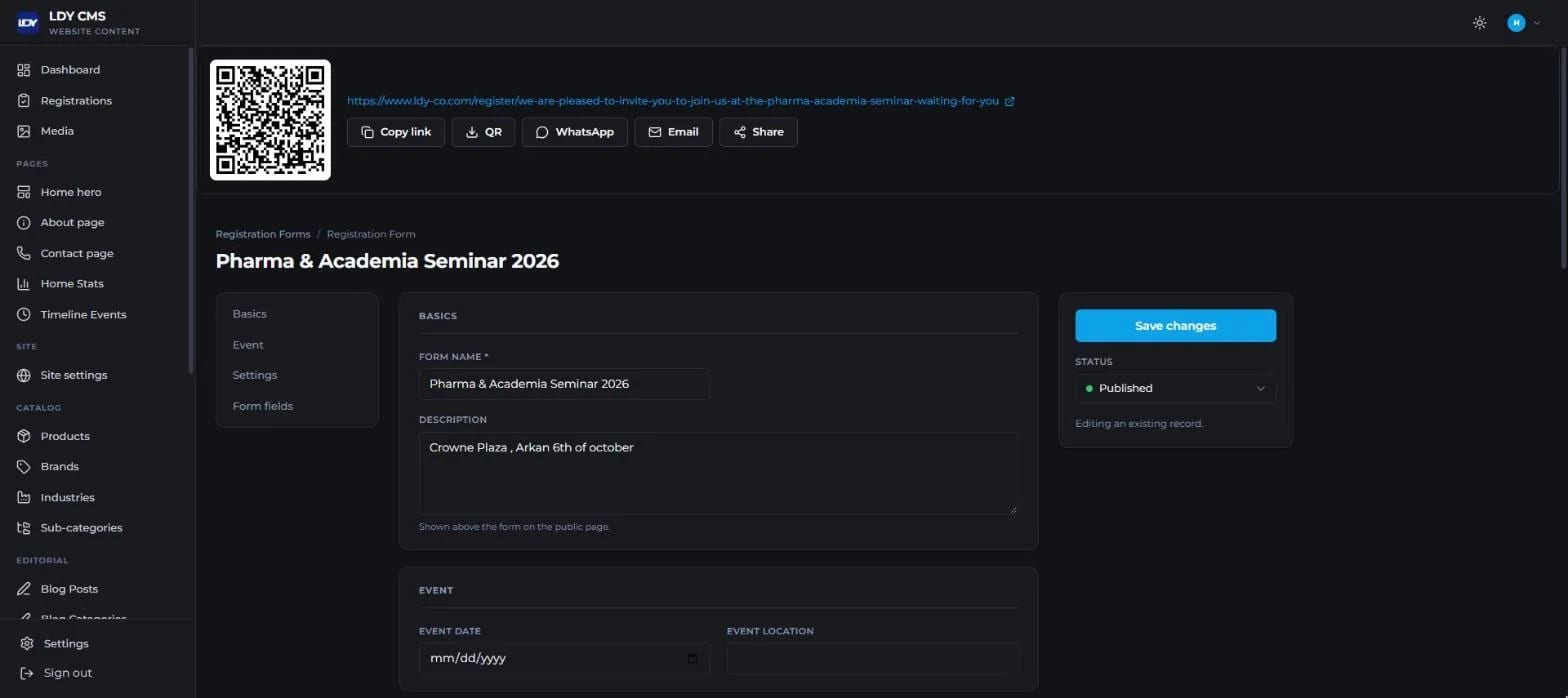
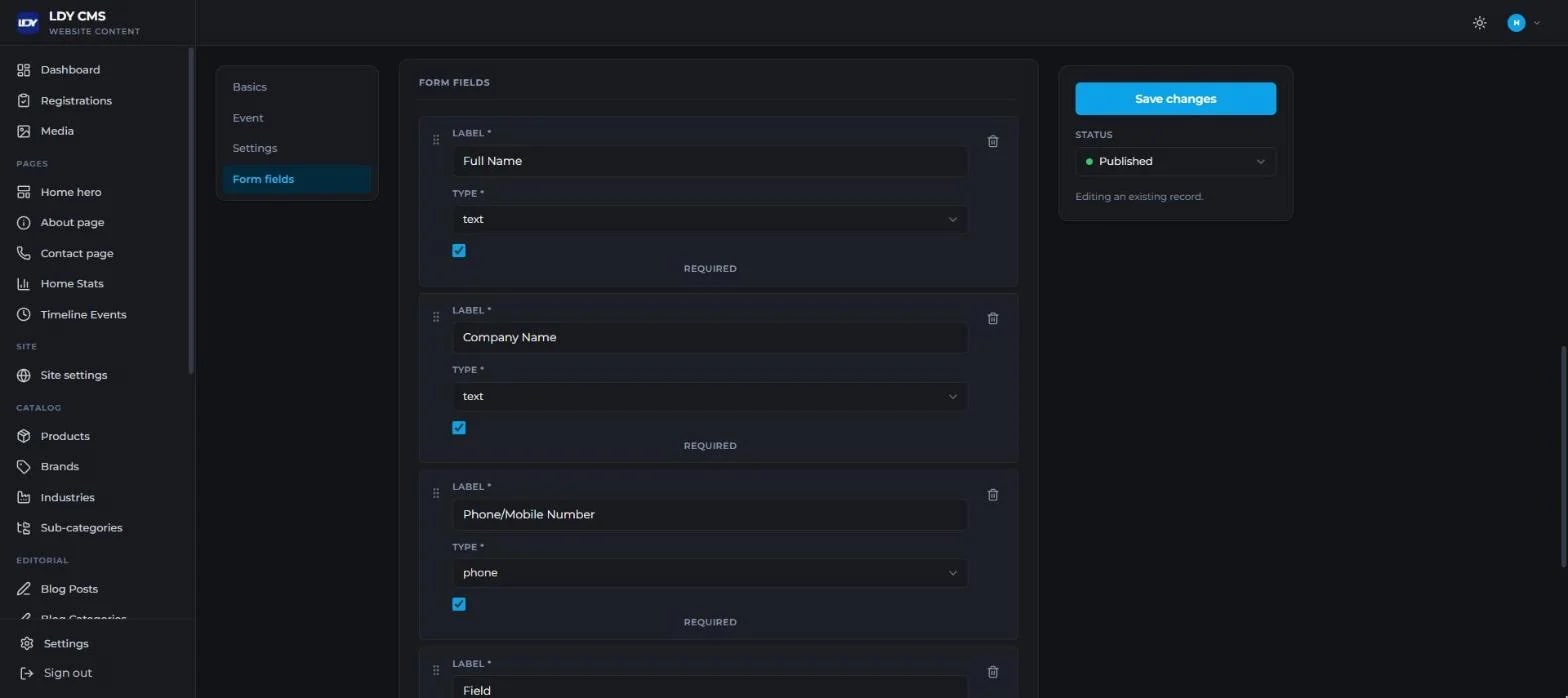
A registration-form builder for each seminar or event: name, description, event date and location, settings, and custom fields (text, phone and more) with required toggles and drag-and-drop ordering.
Every form gets a public registration link and a QR code, with one-click copy, QR download, and sharing by WhatsApp or email.
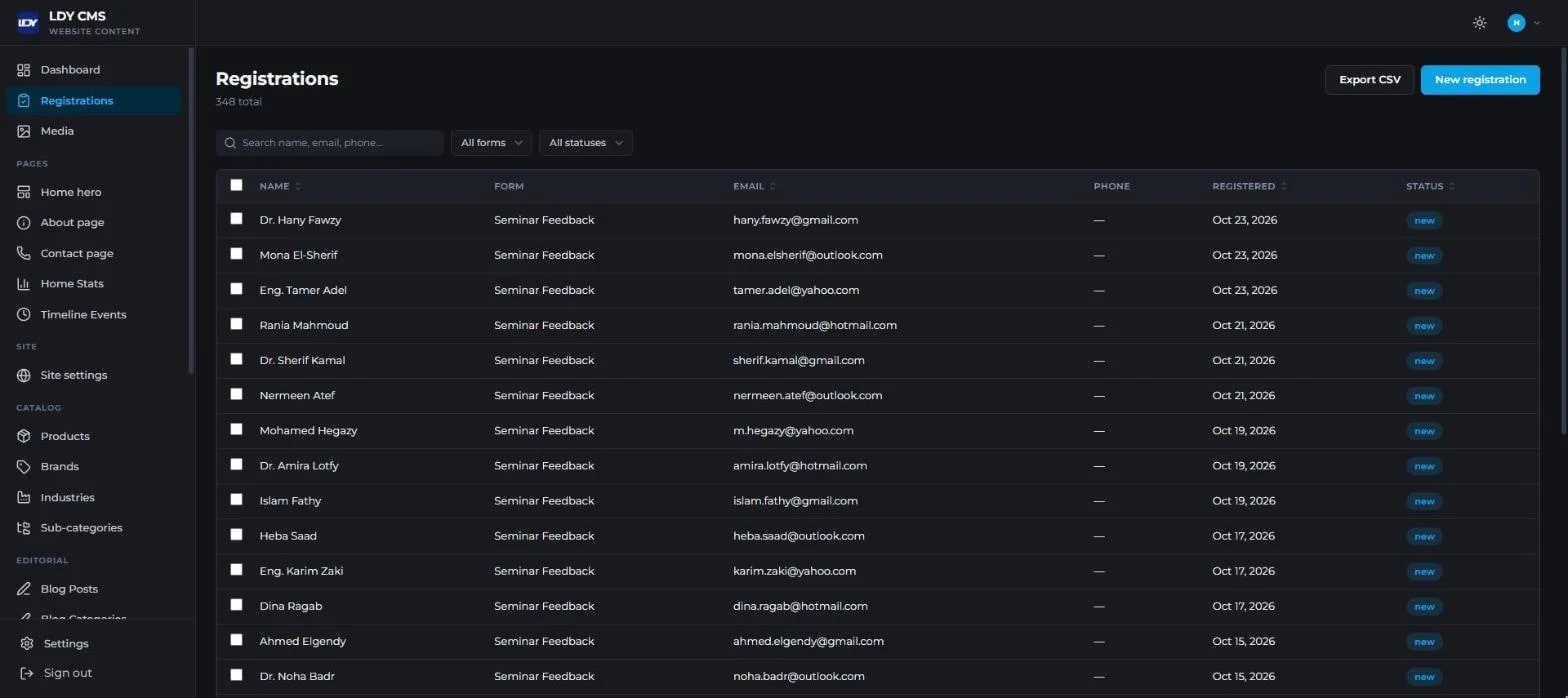
A registrations inbox with filters by form and status, search by name, email or phone, manual registration and CSV export.
3) Pages & editorial
Home hero variants (heritage, product and industries) with draft and published states, plus the about page, contact page, home statistics and the company timeline since 1962.
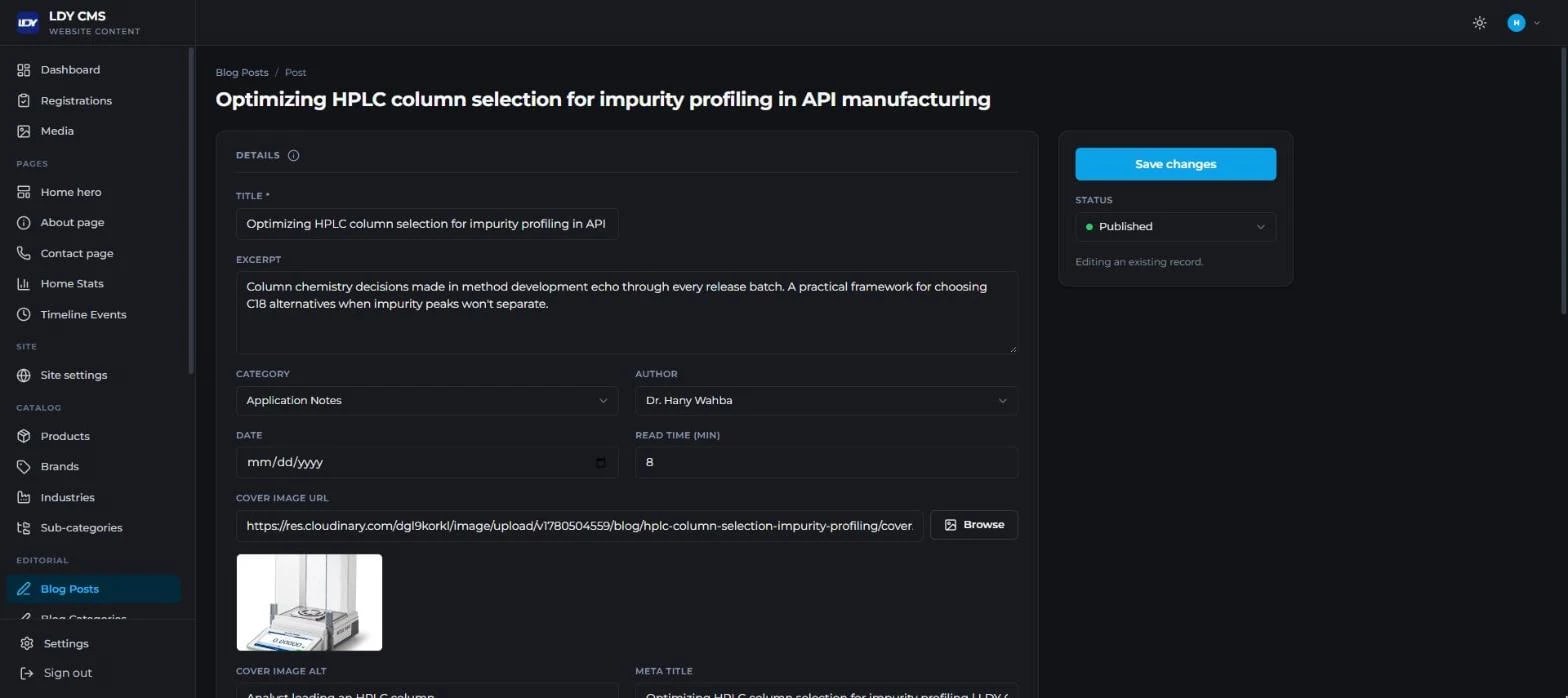
Blog and news posts with categories, authors, excerpt, read time, cover image and alt text, and meta title and description.
Supporting content for services, offices, clients, brands, industries and sub-categories, and a central media library.
4) Roles & permissions
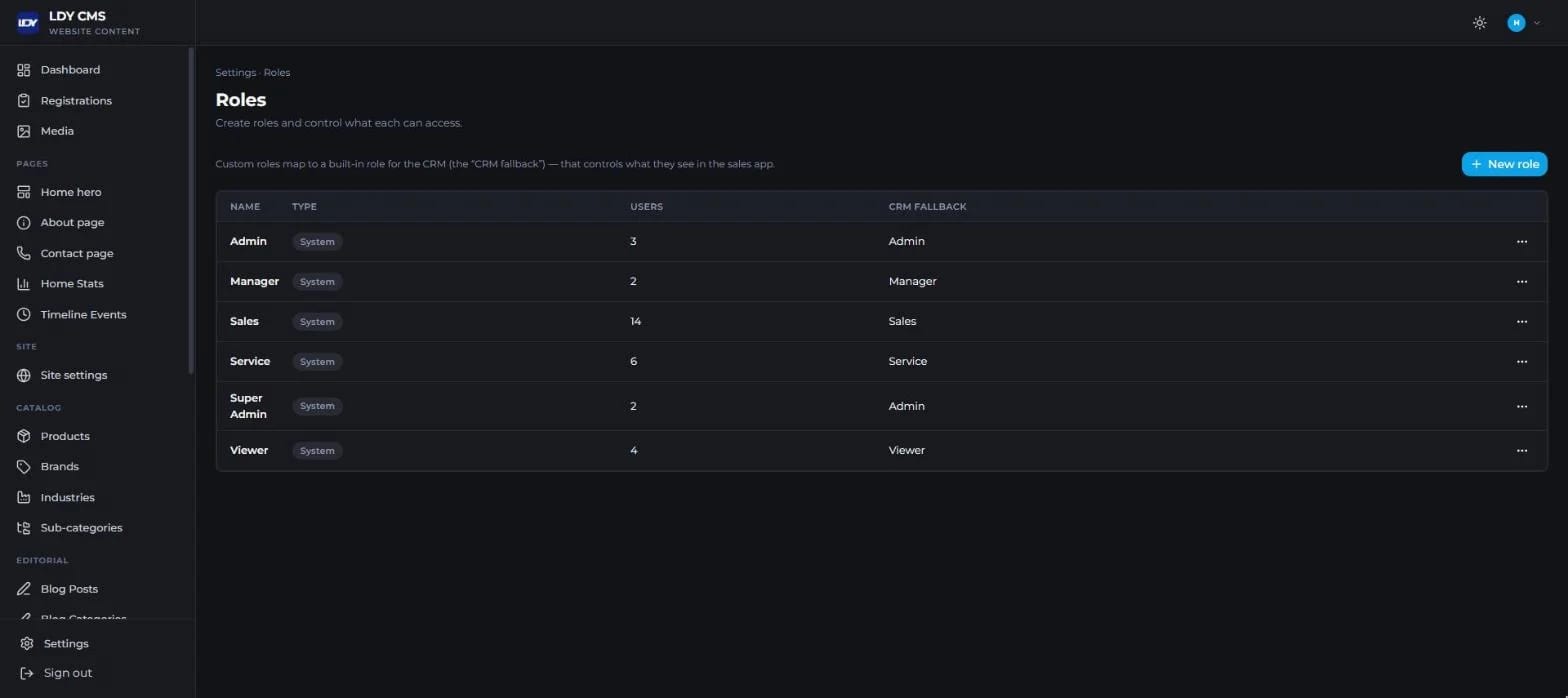
System and custom roles with the number of users in each, where every custom role maps to a fallback role in the CRM.
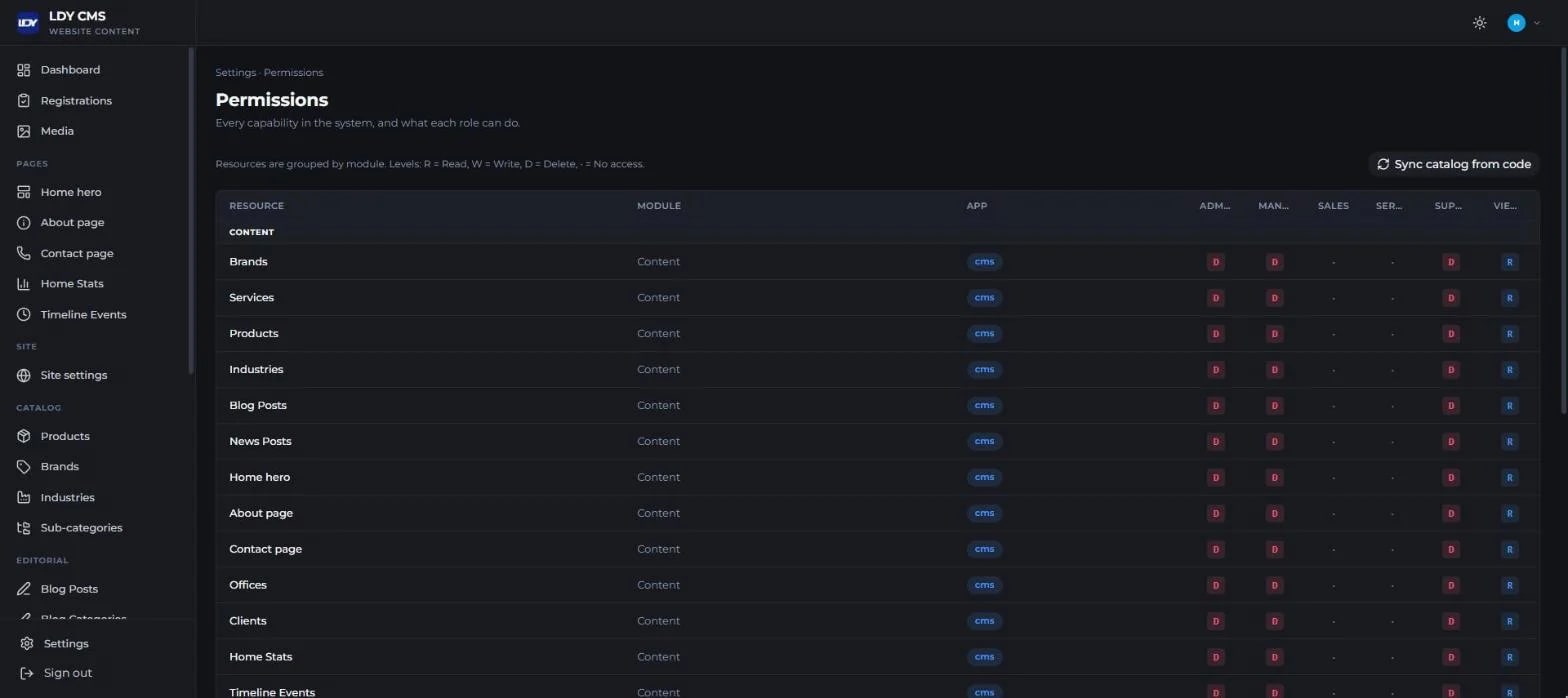
A permissions matrix for every resource, grouped by module and app (CMS or CRM), with Read, Write and Delete levels per role.
A "sync catalog from code" action that keeps the permission list aligned with new features as they ship.
Under the Hood
Front end: Next.js and TypeScript, with a clean light and dark interface.
Content: a bilingual (English and Arabic) content model that feeds the public website.
Access: shared identity, roles and permissions across the CMS and the CRM.
Media: Cloudinary-backed image delivery.
Outcomes
The full instrument catalogue (products, specs, brands and industries) is maintained by the LDY team, not by developers.
Seminar registration pages are created in minutes and shared instantly by link, QR code or WhatsApp.
Every department sees and edits exactly what its role allows, in both the CMS and the CRM.
Website content stays fresh, bilingual and search-ready.
Enterprise Software Development
Explore Services category
Visual Showcase.
Highlights from the user interface and key features
More case studies
Ali Bambozya: LMS Admin & Analytics Dashboard
Venus Business Solutions: CMS & Mini CRM Dashboard

LDY CMS (Dashboard)