
Digital transformation for a mid-sized company does not start with a huge project or with buying an ERP that covers everything at once. It starts with one painful process that you move off paper, spreadsheets and WhatsApp groups into a clear system, then measure the result before moving on to the next process. Map your processes as they really run, pick the one that costs you the most time, errors or lost customers, and change it in a short phase owned by one person inside the company.
This guide explains what digital transformation means for a mid-sized company in Egypt without the slogans, and why large projects stall. It then sets out a six-step starting plan, a table to help you choose your first process, how to measure success, what you need inside the company before any technology, and examples from our work at HBS.
What does digital transformation really mean for mid-sized companies?
Digital transformation is not a new website, a piece of software you buy or an AI project. It is a change in how work flows: information is entered once, reaches the people who need it on time, and decisions are made from current numbers instead of memory and estimates. Technology is the tool for that change, not the goal.
You know your company needs it when these signs keep repeating:
- The same data is typed more than once. A customer request is logged in WhatsApp, then in a spreadsheet, then in the accounting software.
- The monthly report takes days. Its numbers are spread across files and people.
- Knowledge lives in employees' heads. One person's absence can stall an entire process.
- Customer requests get lost. Nobody knows who replied to whom, or how many requests are waiting.
- Simple questions have no instant answer. How many orders are open today? What is the stock of this item? Who were our biggest customers this quarter?
Some of the change is no longer optional. Since Decision No. 323 of 2022, registered taxpayers must, as things stand (November 2026), issue their invoices electronically, which pushed many companies to organise their item and customer data for the first time. If that is your starting point, see our guide to e-invoicing in Egypt and connecting it to your system.
Why do large digital transformation projects stall in mid-sized companies?
Most stalls do not come from the technology. They come from how the project is run. These are the most common causes:
- One system for everything at once. Sales, inventory, accounting and HR in a single launch means months before anyone sees value, and resistance from every department at the same time.
- No decision-maker on the inside. When the project belongs to the development company rather than to the business itself, decisions slow down and change requests pile up.
- Digitising the mess as it is. Moving a poor paper form onto a screen improves nothing. It only makes the mistake faster.
- Neglecting adoption. A system the team does not use becomes an extra burden next to the spreadsheet. We covered the causes and fixes in why your team doesn't use the CRM.
- No measurement before or after. Without starting numbers you cannot prove the project worked, or decide what deserves the next phase.
Where should you start? A six-step plan
This plan suits a company with a small management team and a limited budget that wants a tangible result from a short phase:
- Map processes as they really run. Sit with the people who do the work, not only those who manage it, and write down every step, who does it and where its data is kept.
- Estimate the cost of each process. How many hours it takes each week, how many errors it produces, and how many customers or opportunities it loses. A rough estimate is enough to start.
- Pick one process to start with. The best candidate repeats daily, causes visible pain, has a measurable outcome and has a single owner inside the company.
- Set one source for each type of data. Where the customer record lives, where the item and price list lives, and who may change them. This decision prevents conflicting numbers later.
- Choose the right tool for this process alone. Ready-made software may be enough, or you may need a custom system or a mix of both, as we explained in custom system vs ready-made software.
- Launch, train, measure, then move on. Run the first phase with a real team, train them on it, measure the result after enough time has passed, then choose the next process based on what you learned.
Before step five, write down what you need in a clear document so you can compare proposals on the same basis. Our software requirements specification template will help.
Which processes should you start with?
The answer differs from one company to another, but these processes are the most common starting points in mid-sized companies:
| Process | Sign it is the right start | What a first phase looks like | What to measure |
|---|---|---|---|
| Customer requests and sales | Requests arrive by website, WhatsApp and phone, and nobody knows their status | One inbox for requests, with stages and an owner for each request | Time to first reply and share of requests closed |
| Quotes and invoices | Every quote is written from scratch and numbers differ between sales reps | Standard templates from one catalogue, linked to invoicing | Time to issue a quote and pricing errors |
| Inventory and purchasing | Stock in the system does not match the warehouse | Recorded receipts and issues, plus regular stock counts | Stock-count differences and stock-outs |
| After-sales service | Customers call more than once about the same problem | Tickets with a clear service level and a history for each customer | Time to resolve a ticket and repeat complaints |
| Internal approvals | Purchase and leave requests wait for a paper signature | An electronic approval flow with notifications | Approval time and number of pending requests |
| Management reporting | The monthly report takes days of manual collection | A dashboard that reads from the existing systems | Time to prepare the report and how often it is used |
How do you know the first phase worked?
Record your starting numbers before any change, even if they are estimates from a one-week sample. Then compare the same numbers after go-live. The most important measures are:
- Time per transaction. From receiving a request to completing it, or from a quote request to sending the quote.
- Number of errors. Corrected invoices, duplicate orders and balance differences.
- Share of work inside the system. How many transactions were recorded in the system against what stayed in spreadsheets or WhatsApp. This is the most honest adoption indicator.
- Speed of reply to customers. Especially in processes that start with a customer request.
- Time to prepare reports. And whether management now asks for numbers it never asked for before, because they are available.
Do not judge the result in the first week, because every new system slows a team down a little before it speeds them up. If the numbers do not improve after enough time, the problem is usually the process design or the training, not the tool. Fix it before you move to a new phase.
What do you need inside the company before any technology?
- A project owner. Someone from management with decision rights and a set amount of time each week to follow up.
- Willingness to change how work is done. Some steps will be removed or merged, and that is part of the value, not a loss.
- Dedicated training time. Do not expect a busy team to learn a new system in their spare time.
- Sound technical basics. Accounts in the company's name, regular backups and permissions that define who sees what.
- A budget for after launch. Every phase reveals small improvements that must be made for its value to be complete.
Does your company need a full ERP from the start?
For most mid-sized companies, no. A full ERP makes sense when many departments share the same data every day, and when the cost of keeping that data apart is higher than the cost of unifying it in one system. At the start, it is better to solve the most painful problem first, as long as you build it on a foundation that can grow later.
The opposite risk is just as real: buying a separate tool for every department until, two years later, you have ten programs that do not talk to each other. The practical middle path is that every new phase uses the same customer record and the same item list, and connects to the previous phase through documented APIs. That way your systems grow with the company, and later you can merge them into one system or keep them separate and connected, based on what the numbers show rather than what a vendor suggests.
How does HBS approach digital transformation for companies?
At HBS we start from the process, not the technology. We sit with the people who do the work, find where time and customers are lost, then propose the smallest phase that delivers clear value, whether that means setting up ready-made software, building a custom system or connecting existing systems. We design each phase to connect to the next without a rebuild, and we make sure your team leaves each phase able to run what was built without coming back to us for every small change.
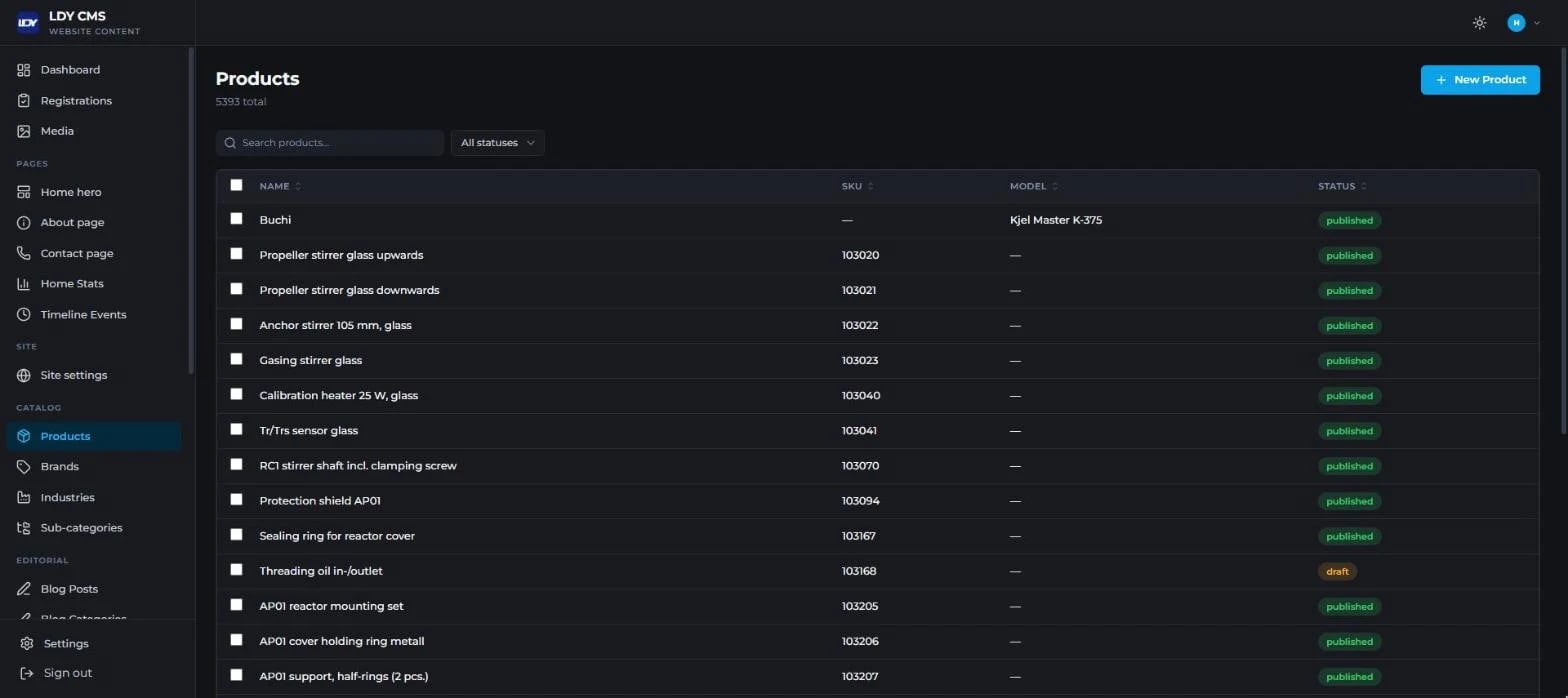
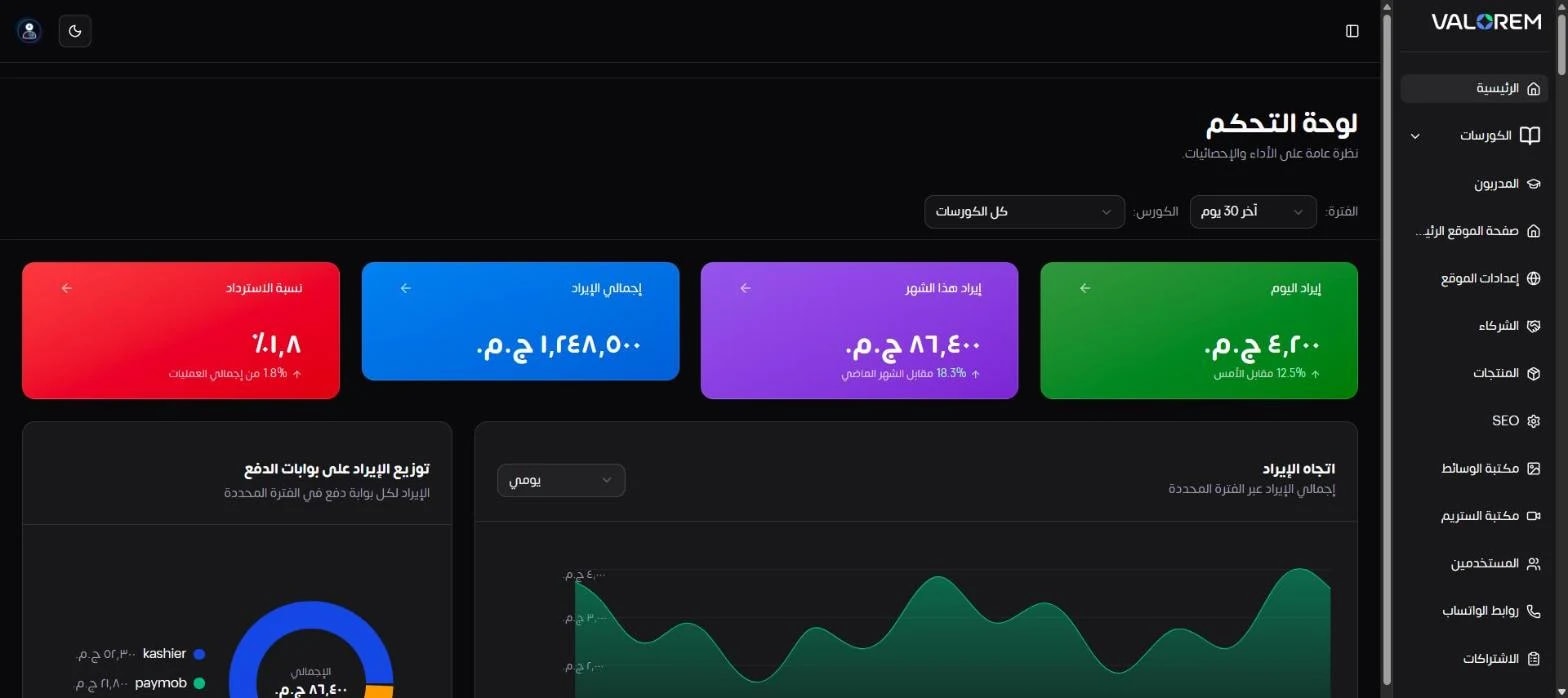
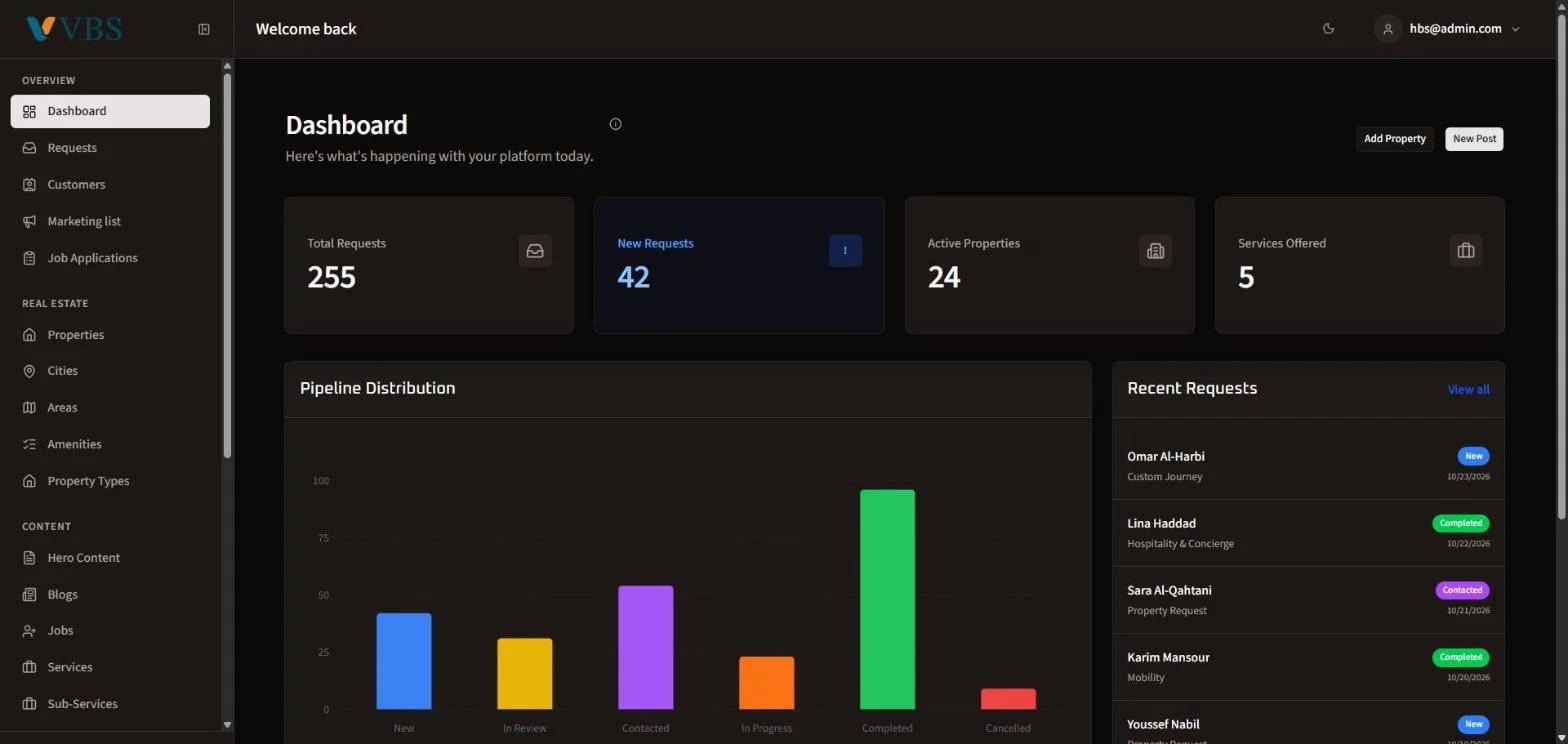
Two examples from our work. Labib Demian Youssef & Co. (LDY CO) was running on an off-the-shelf system that treated sales as a simple pipeline, so we built one dashboard for sales, service and marketing where website inquiries arrive directly as tracked opportunities, and trained the team on site and through webinars, with Arabic video tutorials for every module. In the Venus Business Solutions (VBS) operations dashboard, every website request in five languages lands in one place, the first screen shows requests nobody has opened yet and the average time to first open, and the team runs the property catalogue and the whole website without a developer.
Legal details and fees in this article reflect the situation in November 2026 and may change; check the official source before you decide.
If your company has grown but work still runs on spreadsheets and WhatsApp, and you are not sure where to start digital transformation without a huge project, tell us about the process that hurts most today. Our team will sit down with you in a free discovery session and agree the first step with you, and you can learn more about HBS custom systems and process automation for companies.