
Source code ownership means two things at once: a written legal right to your system's source code, and an actual handover that lets any other team run and develop the system without going back to whoever built it. At the end of a project you should receive at least five things: the full repository with its change history, owner access to servers, the domain and third-party accounts, the database and files, technical documentation, and a list of the licences for everything used in the system. If any of these is missing, you are still tied to your development company, whatever the contract says.
This guide explains the difference between legal ownership and practical control, sets out the full handover list in one table, then shows how to confirm that what you received actually works, which accounts must be in your company's name, which licences limit what "the code is mine" means, the common handover mistakes, and how we handle handover at HBS.
What does source code ownership mean, and why is a contract clause not enough?
Ownership has two layers. The first is legal: as things stand (November 2026), Egypt's Intellectual Property Rights Protection Law No. 82 of 2002 protects computer programs as works, and requires any transfer of an author's economic rights to be in writing and specific. So the contract must state clearly that the rights in the code pass to you, when that happens and what is excluded. This is a general explanation, not legal advice, so review your contract with a lawyer before you sign.
The second layer is practical, and it is the one many companies forget. The contract can put the code in your name while the repository stays on the developer's account, the server stays on their credit card, and the passwords stay in one person's head. In that case you own the code on paper only. We covered the clauses that protect these rights before signing in our article on software development contract clauses that protect you. This article focuses on what you actually receive at the end.
What should you receive at the end of the project?
Use this table as your handover list, and ask for it to be attached to the acceptance record and signed by both sides:
| Item | What exactly you receive | How to verify it |
|---|---|---|
| Code repository | The full Git repository with all branches and change history, inside an organisation account your company owns | You hold owner rights and can remove any other member |
| Every part of the system | Front-end, back-end and mobile app code, plus any supporting services or scripts | Nothing runs in production without its code in the repository |
| Infrastructure and deployment | Server configuration, Docker files, automated deployment steps and a list of environment variables without their secret values | You can rebuild a complete environment from these files |
| Accounts and access | Owner access to hosting, the domain and third-party services | Every account is registered to your company email and billed to your company |
| Data | The database, its schema, uploaded files and backups | A backup restores successfully on a separate environment |
| Technical documentation | How to run locally and deploy, system architecture, API documentation and incident procedures | A new developer understands the system from the documents without a meeting |
| Licences | A list of libraries, fonts, templates and paid components, with the licence for each | No paid component is registered to the developer alone |
| Design files and tests | The original design files, automated tests and test data | The tests run and pass on a clean copy |
How do you confirm the code you received actually works?
Receiving files proves nothing. The real test is for someone else to build the system from scratch using only what the development company handed over. Run these steps before the final payment:
- Ask an independent developer or your in-house team to clone the repository on a fresh machine or server that was never used in the project.
- Follow the documentation word for word to run the system locally and then deploy it to a test environment, and note every step that needed a question to the development company.
- Restore a database backup and confirm the system runs on the real data.
- Run the automated tests and confirm they pass without changes.
- Search the repository for exposed secrets such as passwords and API keys. Finding them in the code is a security risk to fix before acceptance.
- Compare the deployed version with the repository to confirm that what runs in production is the latest state of the main branch.
Every question you had to ask during these steps reveals a gap in the documentation, so ask for it to be added before the project closes.
Which accounts and access rights must be in your company's name?
The simple rule: every account the system cannot run without must be registered in your company's name and official email, billed to your company, with the developer added as a member who can be removed. The most important are:
- Domain registrar and DNS management. Whoever owns the domain effectively owns the website and the email.
- Hosting or cloud account. An AWS, Azure or other provider account in your company's name, not a sub-account inside the developer's account.
- Code hosting platform. A GitHub or GitLab organisation your company owns.
- App store accounts. The Apple and Google Play developer accounts in your company's name, along with the app signing keys, because losing them can block you from publishing updates.
- External services. The payment gateway, email and SMS services, maps and analytics tools, since all of them hold your data and sometimes your money.
After handover, change the passwords and rotate the API keys the development team had access to, even if the relationship is excellent. It is standard security practice, not an accusation.
Which licences should you understand before saying "the code is mine"?
No modern system is written entirely from scratch. It relies on open-source libraries and frameworks, and sometimes on paid components or on internal tools owned by the development company. What you own is the code written specifically for your project. Everything else you use under a licence:
- Permissive open-source licences. Such as MIT and Apache 2.0, which allow commercial use with light conditions such as keeping the licence text.
- Copyleft licences. Such as the GPL, which can set conditions on how code that uses them is distributed. Ask for a list of them, and read their terms in the Open Source Initiative licence list.
- Paid components. UI templates, fonts and paid plugins should be licensed to your company or transferable to it.
- The development company's internal tools. If the company uses a library it owns across several projects, you usually get a permanent licence to use it, not ownership. That is acceptable as long as it is written, permanent and not tied to the contract continuing.
The same logic applies to the AI tools and cloud services your system depends on, which we explained in detail in our guide to avoiding AI vendor lock-in.
What are the common handover mistakes?
- Receiving a zip file instead of the repository. A zip file carries no change history and does not show which version runs in production.
- A domain registered to the developer. It looks like a small detail until renewal time or a dispute.
- Hosting inside the development company's account. Moving it later becomes a full migration project.
- One-page documentation. A README that explains local setup only is not enough to run a system in production.
- Missing mobile app signing keys. Without them, you may face a long process to regain the ability to update your app.
- Paying the final instalment before the handover test. After full payment you lose your strongest lever for getting gaps filled.
What should you do if you never received the code from a past project?
Many companies discover the problem late, when they want to develop the system with a new team or when the old developer stops replying. If that is your situation, start with these steps in order:
- Take stock of what you hold today. List every account, domain and server the system depends on, and note whose name each is registered in and who pays for it.
- Secure what you can reach immediately. Move the domain, payment accounts and email into your company's ownership before anything else.
- Request the handover in writing. Send the development company a clear list of what you need, citing the contract clauses if there are any.
- Have an independent developer assess what you receive. The code may be worth developing further, or rebuilding may cost less than fixing it.
- Do not start a new project on the same terms. Make the handover list in this article part of every future contract.
And if you are still comparing a custom system with ready-made software, remember that code ownership is one of the main reasons to choose a custom system, as we explained in custom system vs ready-made software.
How does HBS hand over code and knowledge?
At HBS we treat handover as part of the system itself, not as an administrative step at the end. Every piece of code in our projects goes through review before it is merged, we write automated tests for core functions, and we deliver technical documentation that includes architecture decision records, API documentation and operational runbooks. The goal is that your team, or any other team you choose, can continue working on the system from where we stopped.
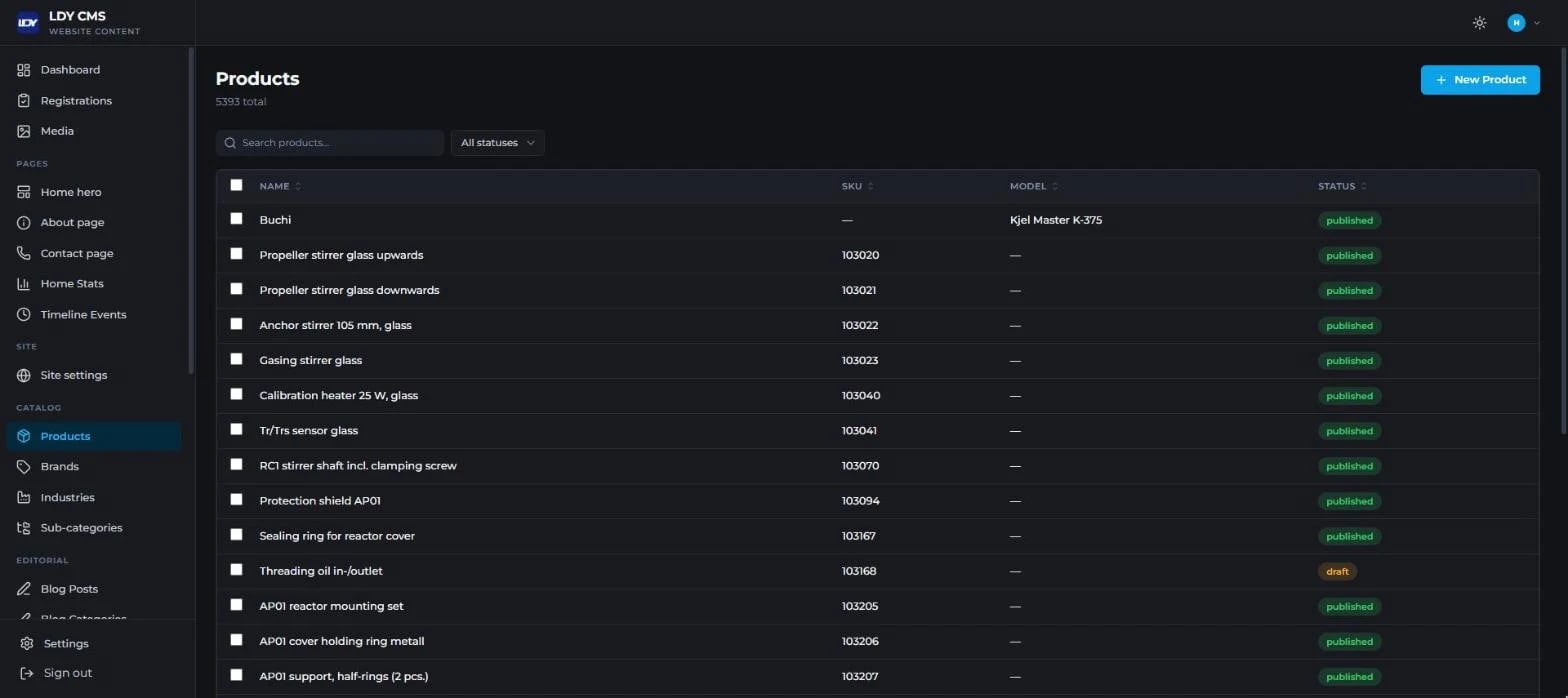
For us, handover includes knowledge too. On the LDY CMS dashboard project for Labib Demian Youssef & Co., we trained the team on site and through live webinars, and produced short Arabic video tutorials for every module inside the help section, alongside a "How to use this page" guide on every screen, with user permissions and an audit log the company manages itself. A system your team does not know how to run is not fully yours, even if the code is in your name.
Legal details and fees in this article reflect the situation in November 2026 and may change; check the official source before you decide.
If you are preparing a new project and want the code and accounts to be yours from day one, or you have an older system and are not sure what you are missing, talk to us. Our team will go through this handover list with you in a free discovery session, and you can learn more about HBS custom business software development.